

Osmo TopOil – Food-Safe Hard Wax Oil for Wooden Worktops
Osmo TopOil – Food-Safe Hard Wax Oil for Wooden Worktops - 5ml Sample Sachet / 3028 - Clear Satin is backordered and will ship as soon as it is back in stock.
- Pay Pal
Klarna eligibility and exact payment schedule are confirmed at checkout. 18+. T&Cs apply.
Free next-working-day delivery Eligible mainland UK postcodes FREE
| Area | Excluded postcodes |
|---|---|
| North-east Scotland | AB31–AB45, AB51–AB56 |
| Central & northern Highlands | FK19–FK21; all IV |
| Outer Hebrides | All HS |
| Arran & Cumbrae | KA27–KA28 |
| Caithness, east Sutherland & Orkney | All KW |
| Argyll & Inner Hebrides | PA21–PA38, PA41–PA49, PA60–PA78 |
| Perthshire & western Highlands | PH1 1, PH1 3, PH1 4, PH5–PH10, PH15–PH26, PH30–PH44, PH49–PH50 |
| Shetland | All ZE |
| Northern Ireland | All BT |
| Channel Islands & Isle of Man | All GY, JE & IM |
| Isles of Scilly | TR21–TR25 |
Need delivery outside our standard area? Please contact us before ordering and we’ll check whether a separate service can be arranged.
Click & Collect Salisbury Trade Counter FREE
Osmo TopOil is a premium food-safe hardwax oil developed specifically for wooden kitchen worktops, tables, desks, shelving, furniture and other interior work surfaces.
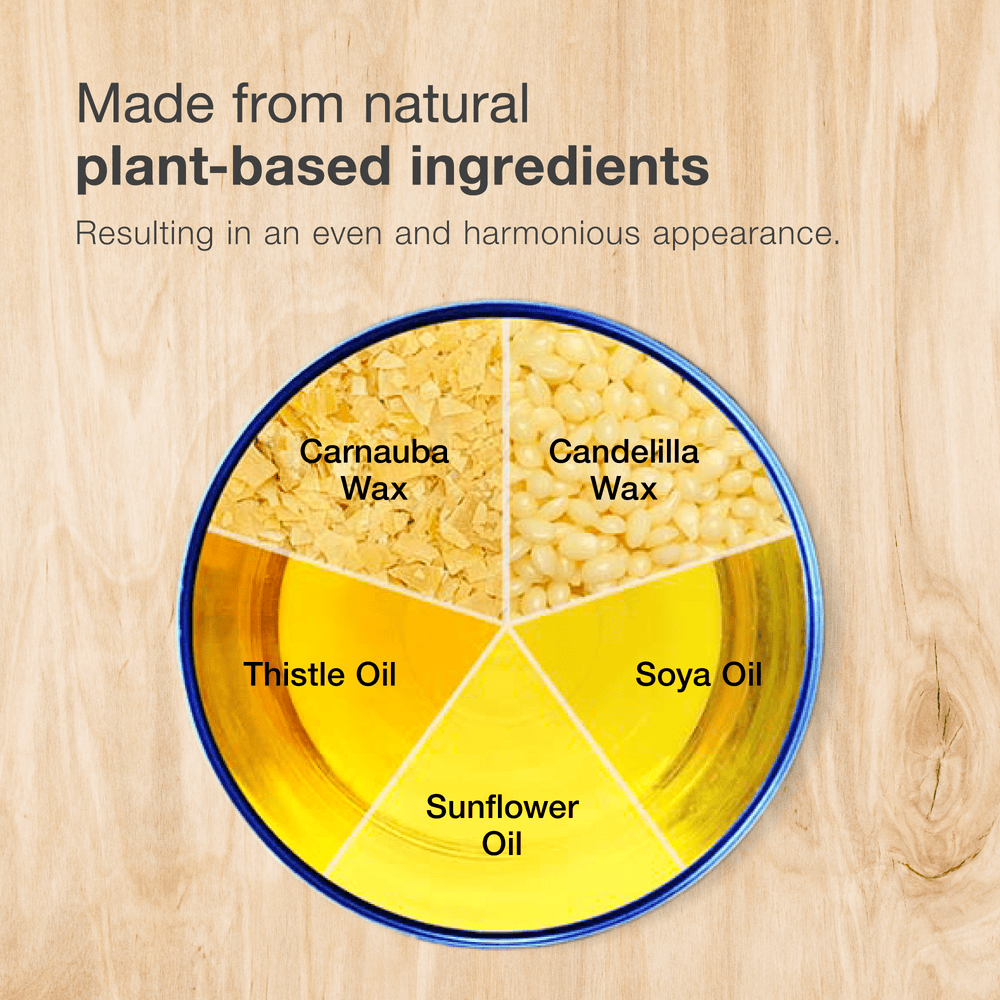
Made from a carefully balanced combination of natural plant oils and hard waxes, TopOil penetrates into the timber while creating an extremely durable, water-repellent and dirt-resistant surface. Once dry, it is suitable for surfaces that may come into contact with food and is highly resistant to everyday spillages including water, wine, beer, coffee, tea, cola, fruit juice and milk.
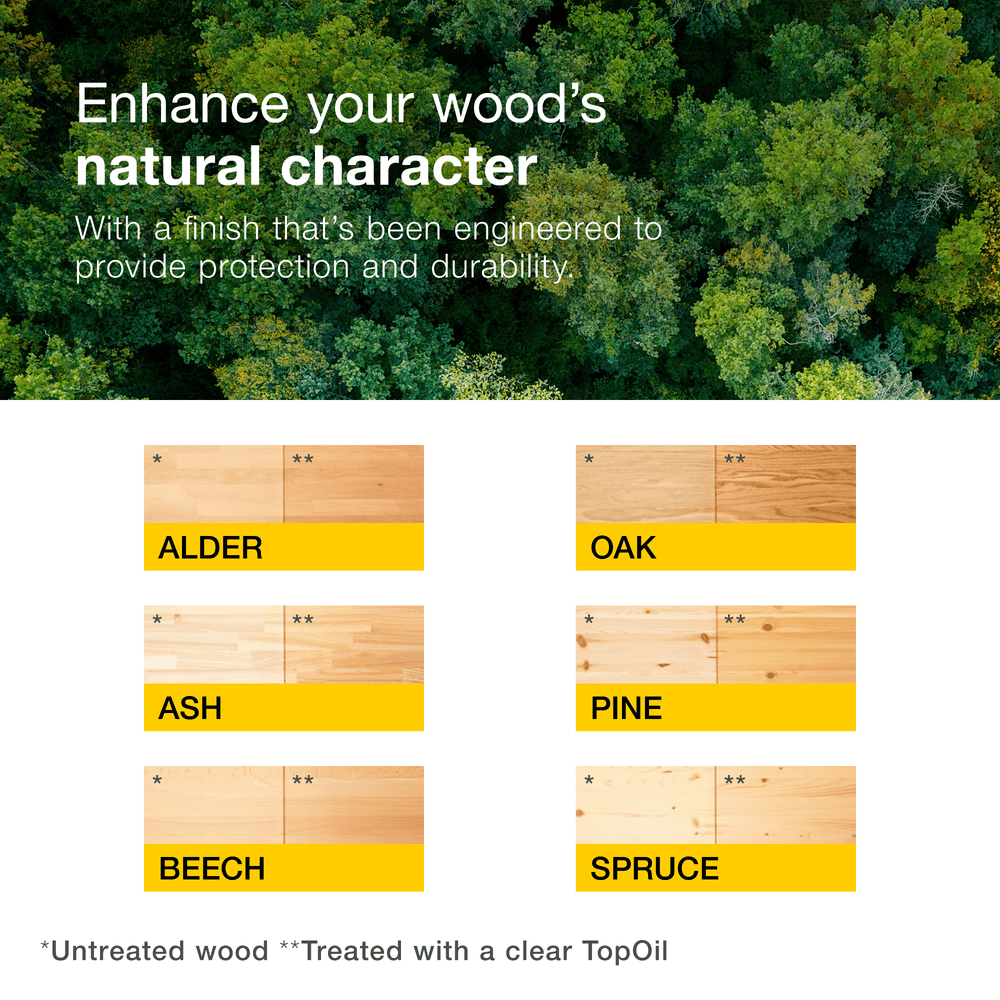
Available in clear, natural and tinted finishes, Osmo TopOil allows you to protect the wood while either enriching its natural character, retaining a pale untreated appearance or adding a subtle transparent colour.
Wiltshire Wood Recommendation:
TopOil is our preferred Osmo finish for wooden kitchen worktops, dining
tables, desks and frequently used furniture. It provides strong
protection without creating a thick plastic-looking film and can be
cleaned, maintained and locally refreshed without sanding the entire
surface.
Apply the first coat very thinly using a suitable brush, microfibre roller or applicator fleece. Once dry, apply the second coat exceptionally thinly using an applicator fleece or lint-free cloth.
Food-Safe Protection for Wooden Worktops
Osmo TopOil is designed for wooden surfaces exposed to regular handling, cleaning, moisture and food preparation. Once fully dry, the finish is food-safe in accordance with European food-contact testing requirements.
The oil-and-wax system penetrates and protects the timber without sealing it beneath a brittle surface film. The finished surface remains microporous, allowing it to breathe while resisting water, dirt and common household spillages.
Food-Safe Once Dry: TopOil is suitable for wooden kitchen worktops and food-contact surfaces once the coating has dried and cured correctly. Do not prepare food directly on the surface until the complete system has fully cured.
Why Choose Osmo TopOil?
- Developed specifically for wooden worktops and furniture
- Food-safe once fully dry and cured
- Extremely durable and hardwearing
- Highly water-repellent and dirt-resistant
- Resistant to wine, beer, coffee, tea, cola and fruit juice
- Resistant to milk and everyday water spillages
- Helps prevent water marks when correctly applied
- Based on natural plant oils and hard waxes
- Microporous and breathable
- Will not crack, peel, blister or flake
- Maintains the natural feel and character of timber
- Suitable for worktops, tables, desks and shelving
- Suitable for solid wood and edge-glued timber panels
- Also suitable for appropriate cork and OSB surfaces
- Can be locally refreshed without sanding the complete surface
- Suitable for children’s toys once dry
- Available in seven clear, natural and tinted finishes
- Available in sample sachets before purchasing a full tin
Which Osmo Oil Is Right for Me?
| Osmo Finish | Best For | Key Difference |
|---|---|---|
| Osmo Polyx-Oil Original | Wooden floors, furniture, staircases and general interior timber. | General-purpose clear hardwax oil designed particularly for floors and interior joinery. |
| Osmo Polyx-Oil Rapid | Floors and furniture where a faster coating programme is required. | Fast-drying clear protection that can allow two coats in one day. |
| Osmo Polyx-Oil Tints | Adding transparent colour to wooden floors, furniture and joinery. | Coloured flooring system normally followed by an appropriate Polyx-Oil topcoat. |
| Osmo Polyx-Oil Effect Raw | Pale wooden floors and furniture where a freshly sanded appearance is required. | White-pigmented finish that reduces the normal warming caused by clear oil. |
| Osmo TopOil | Kitchen worktops, dining tables, desks, shelving and furniture. | Food-safe, highly water-repellent protection developed for wooden work and furniture surfaces. |
| Osmo Door-Oil | Interior wooden doors, including suitable solid and veneered doors. | Purpose-designed coating system for internal doors. |
Choose Your TopOil Finish
| Finish | Appearance | Best For |
|---|---|---|
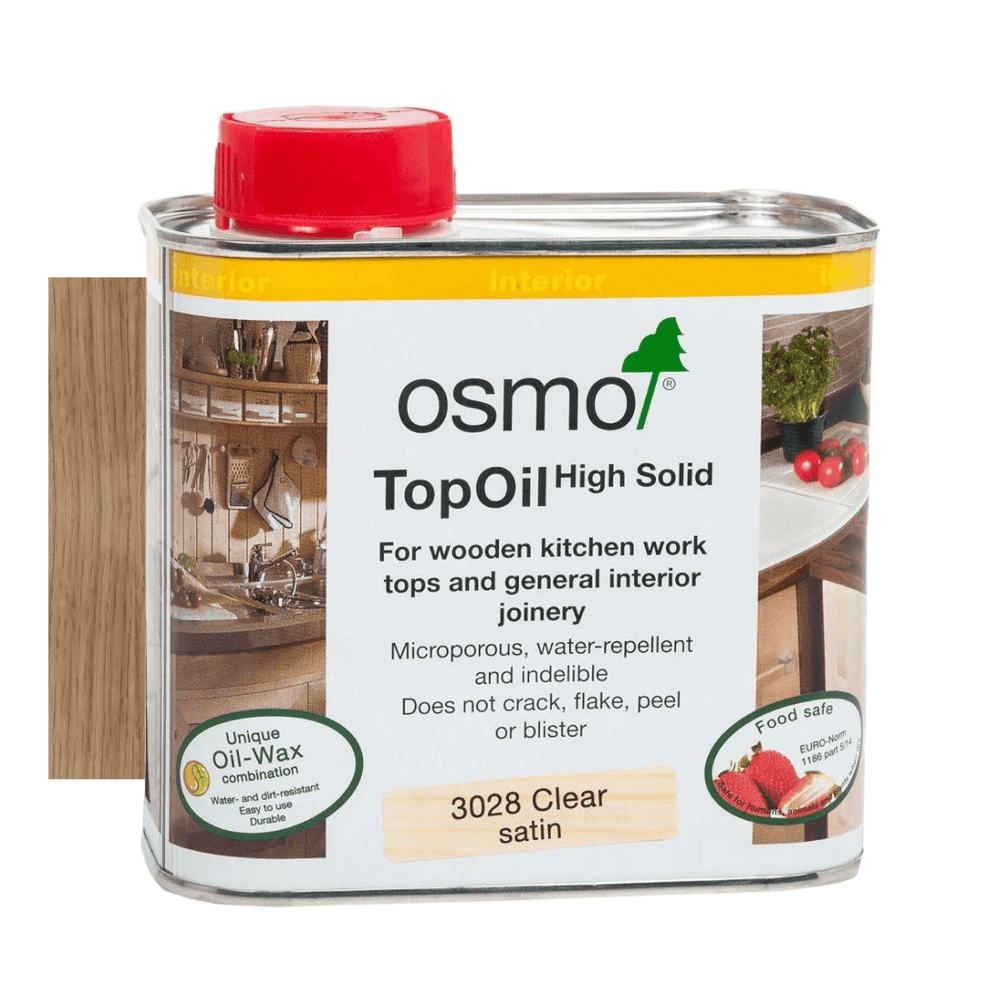
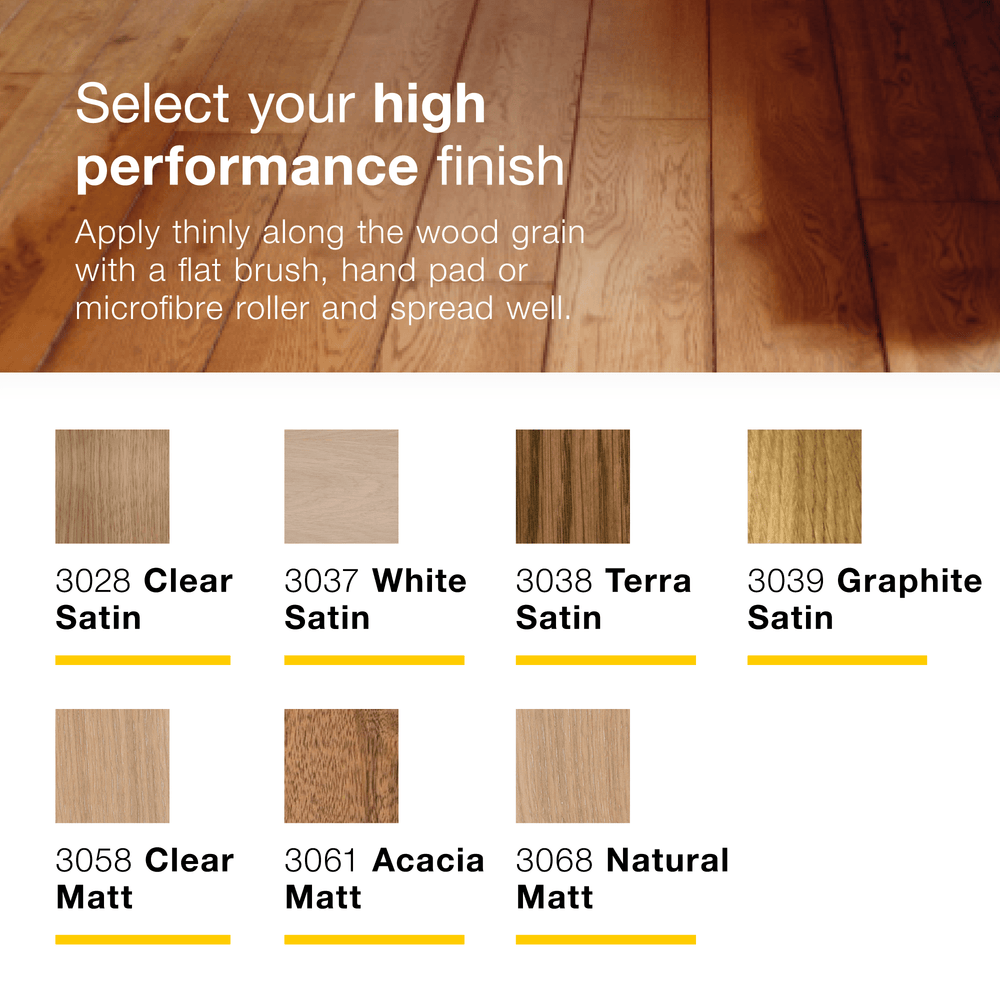
| 3028 Clear Satin | A warm clear finish with a subtle satin sheen that gently reflects light and enriches the timber grain. | Traditional and contemporary worktops where a softly polished, naturally oiled appearance is wanted. |
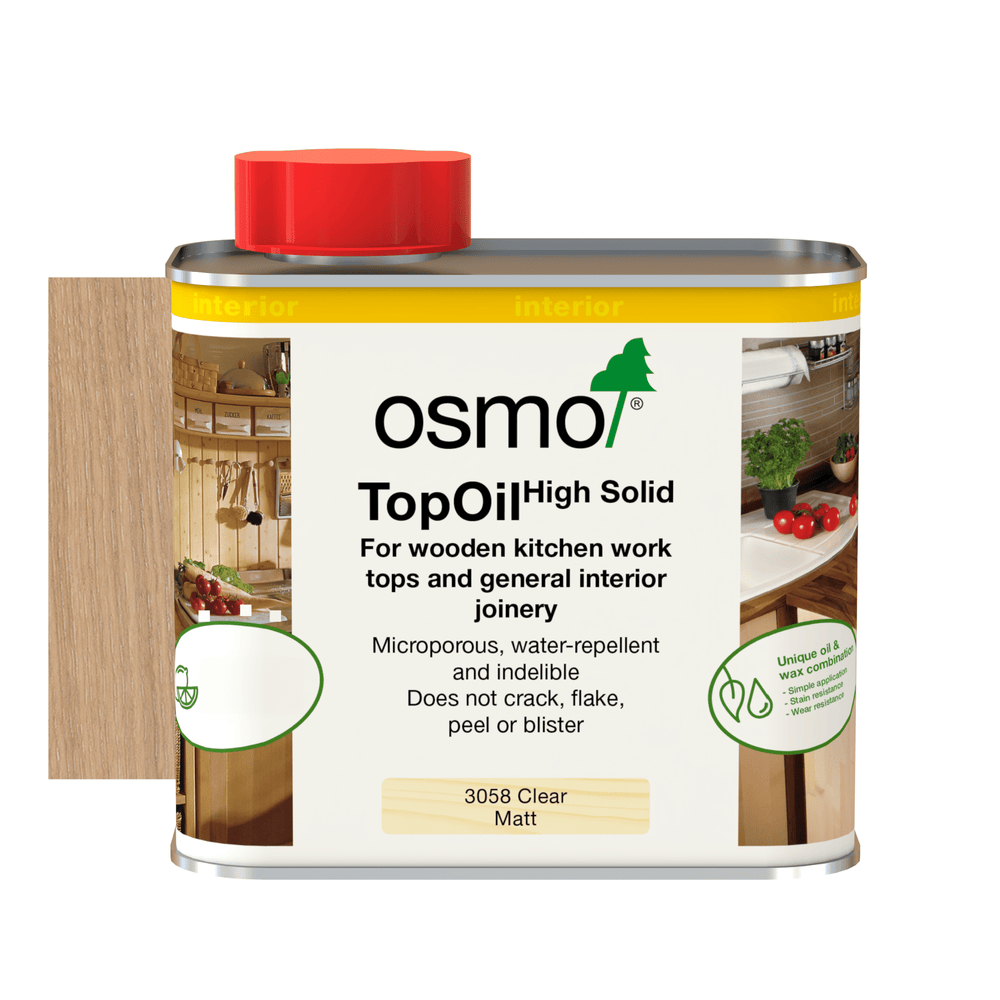
| 3058 Clear Matt | A clear lower-sheen finish that enriches and warms the timber without producing a noticeable shine. | Worktops and furniture where a natural matt appearance is preferred. |
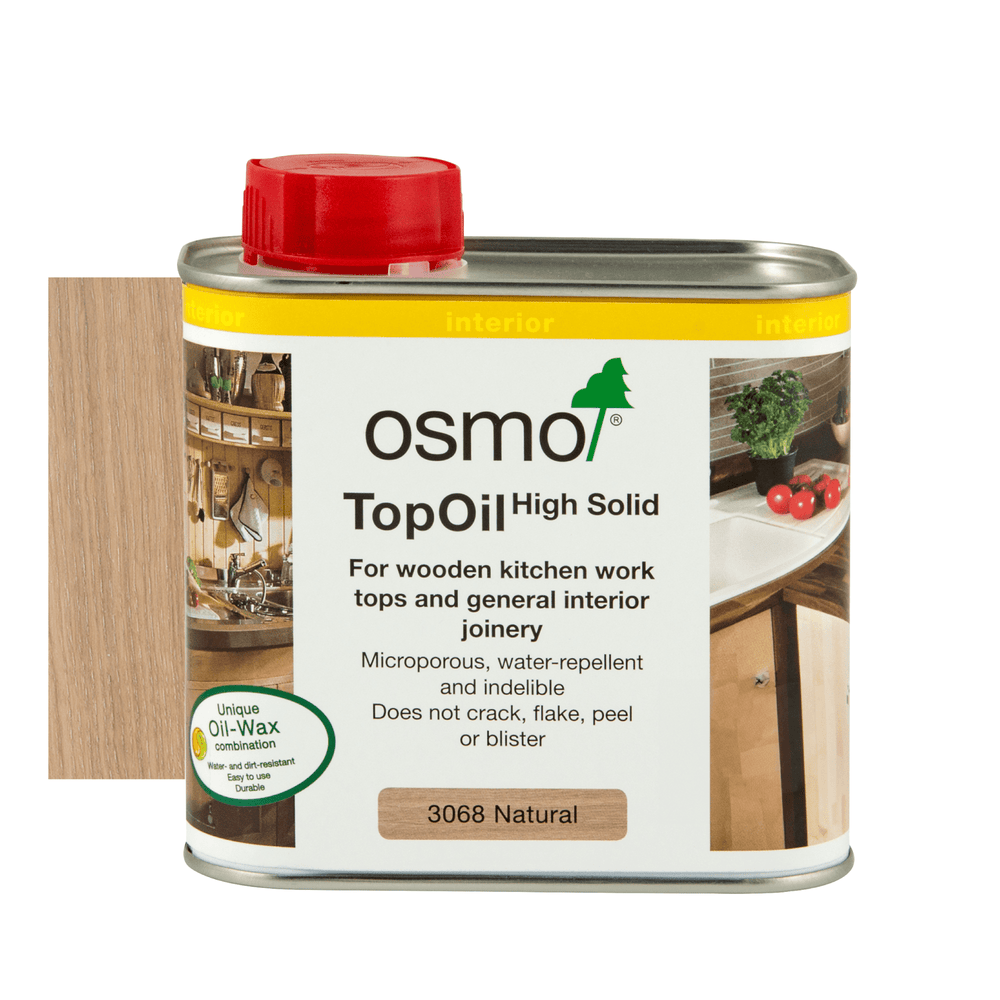
| 3068 Natural Matt | A subtly white-pigmented finish that helps pale timber retain a light, almost untreated appearance. | Oak, beech, birch, pine and other light woods where minimal colour change is required. |
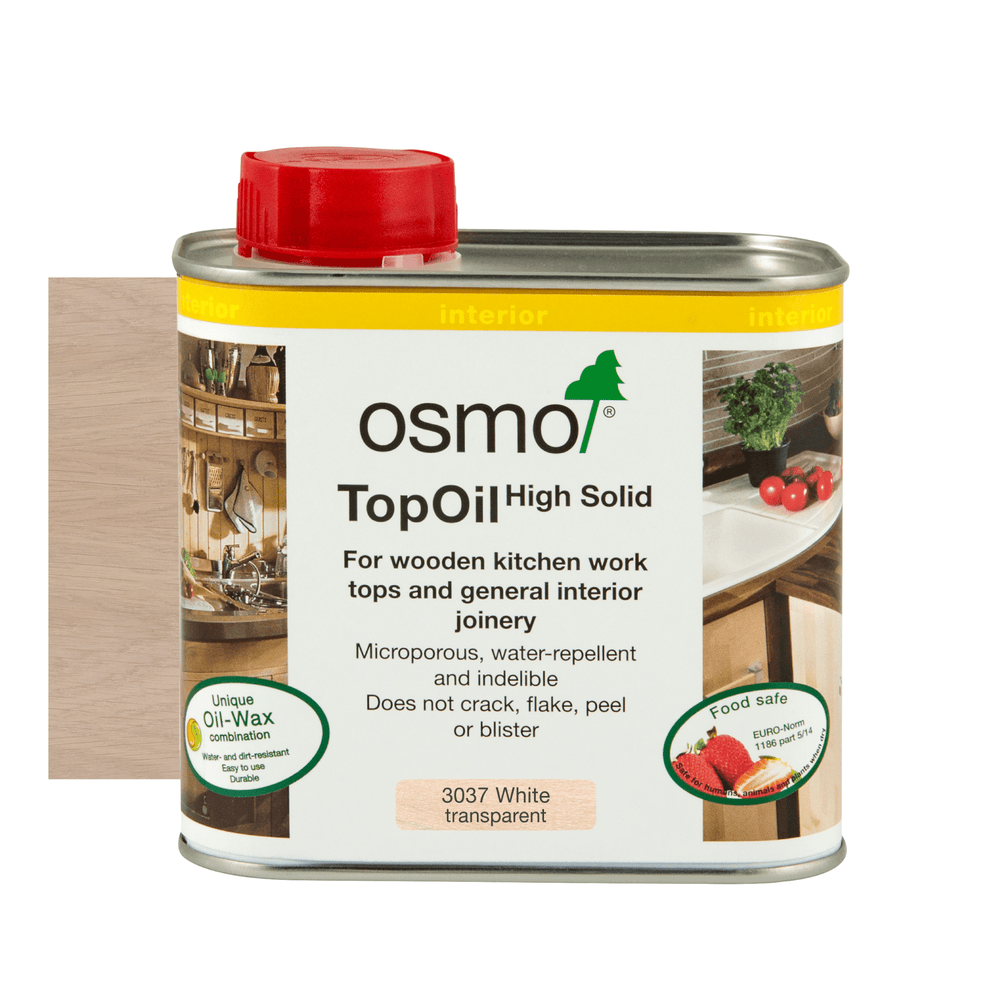
| 3037 White Satin | A transparent whitewashed effect that lightens the surface while keeping the timber grain visible. | Pale worktops and furniture where a Scandinavian-style white tint is wanted. |
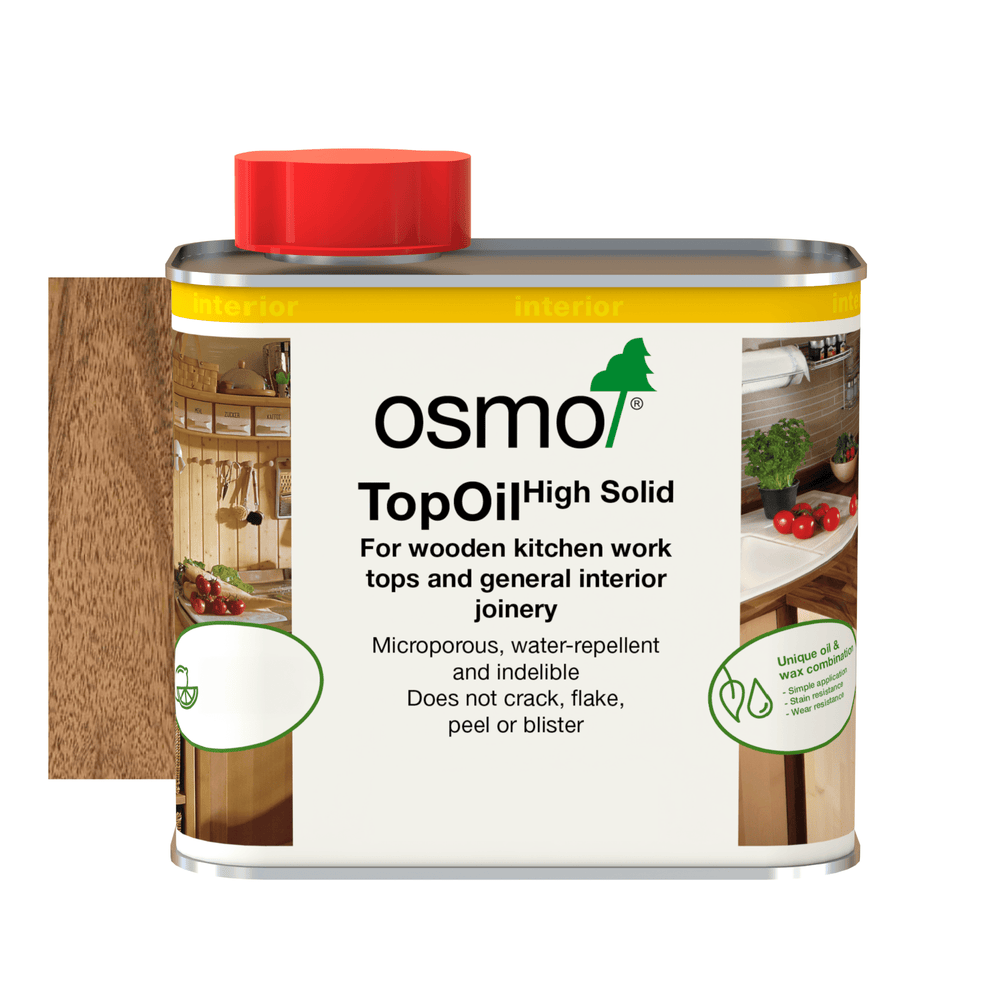
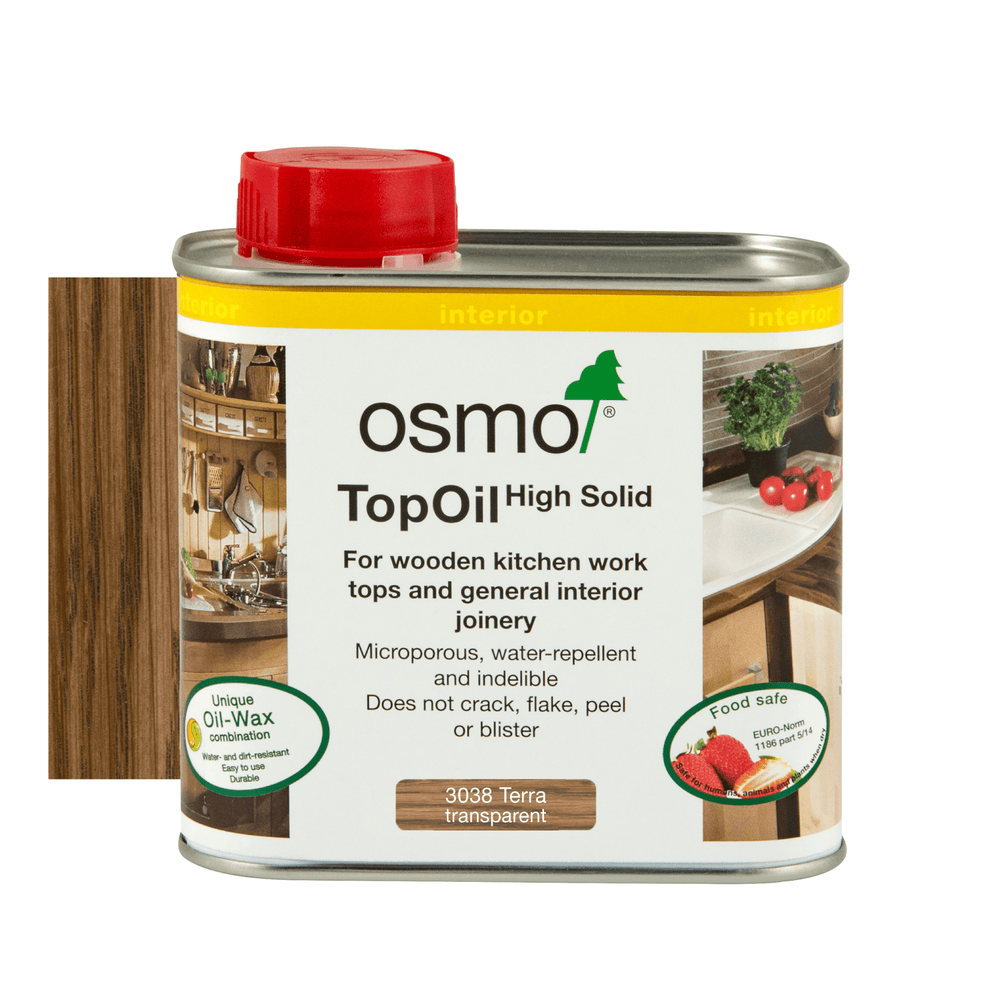
| 3038 Terra Satin | A warm transparent brown shade designed to create a rich, dark-oak-style appearance. | Worktops, tables and furniture where a deeper, warmer colour is required. |
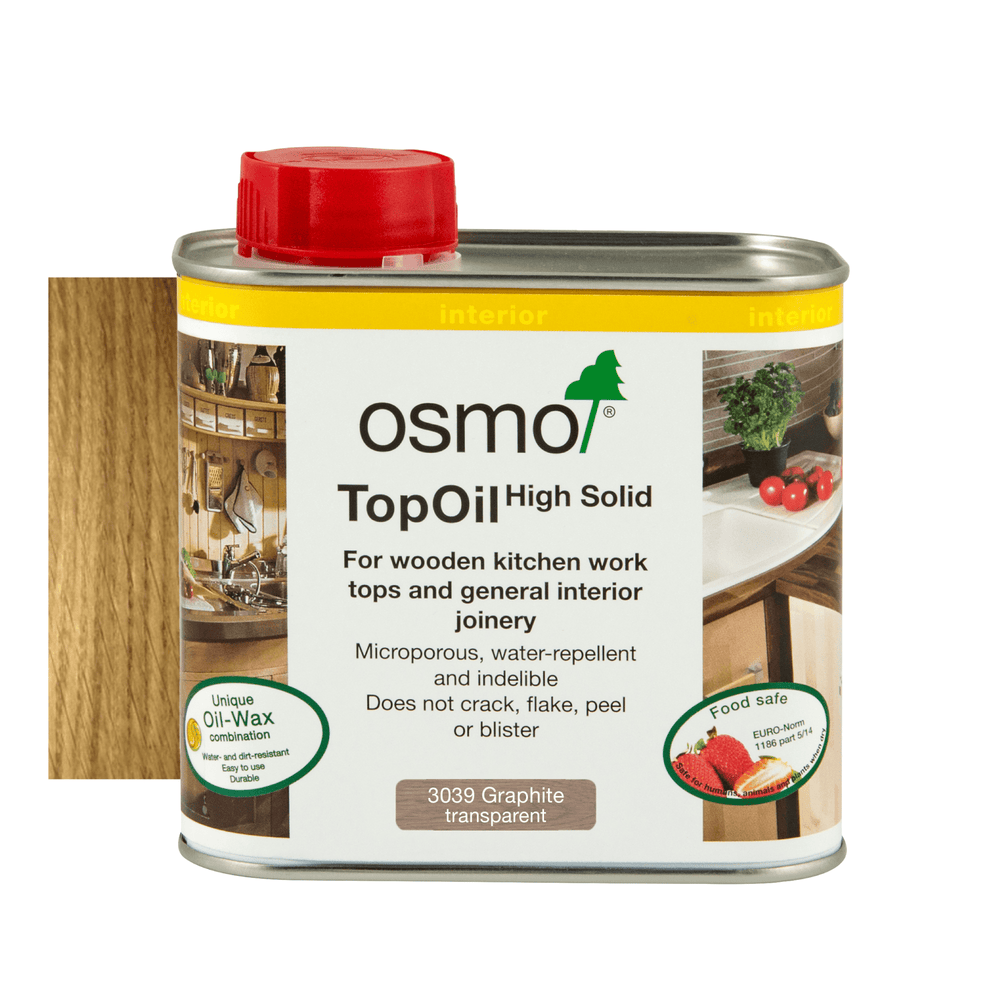
| 3039 Graphite Satin | A transparent dark grey tone that colours the timber while keeping the grain and natural variation visible. | Contemporary kitchens, desks and statement furniture. |
| 3061 Acacia Matt | A warm modern colour with a matt appearance and visible timber character. | Furniture and worktops where a warm, elegant coloured finish is wanted. |
Always Test the Selected Finish: Timber species, sanding, porosity and natural colour will affect the result. Use a 5ml sample sachet and complete a representative test using the intended preparation and application method.
Clear vs Natural TopOil
| Finish | Colour Effect | Choose It When |
|---|---|---|
| 3028 Clear Satin | Enriches and warms the natural colour with a subtle satin sheen. | You want a traditional, richly oiled appearance. |
| 3058 Clear Matt | Enriches and warms the timber with a lower-sheen matt finish. | You want natural colour enrichment without noticeable shine. |
| 3068 Natural Matt | Uses balanced white pigment to minimise the usual darkening caused by clear oil. | You want pale wood to remain close to its freshly sanded colour. |
Natural Contains White Pigment: TopOil 3068 Natural Matt should be applied exceptionally thinly. Excess product can leave a white or chalky appearance, particularly on dark or reddish timber. Remove or redistribute visible white pigment before allowing the coating to dry.
Suitable Surfaces
- Solid wooden kitchen worktops
- Edge-glued wooden worktop panels
- Breakfast bars and kitchen islands
- Dining tables and coffee tables
- Desks and office furniture
- Wooden shelving
- Sideboards and cabinets
- Wooden bathroom vanity tops
- Wooden furniture surfaces
- Interior solid timber panels
- Suitable OSB surfaces
- Suitable cork surfaces
- Previously TopOil-treated surfaces following suitable preparation
Not Intended as a Floor Finish: TopOil is developed for wooden worktops and furniture surfaces. For wooden floors, use an appropriate Osmo Polyx-Oil system.
Timber Suitability
| Timber Group | Suitability | Guidance |
|---|---|---|
| Oak, pine, spruce, beech, ash, alder, Douglas fir, birch and larch | Recommended | Prepare consistently and complete a representative trial before treating the full surface. |
| Maple | Possible subject to testing | Apply very thinly and complete a trial because absorption can be limited or uneven. |
| American or European walnut | Possible subject to testing | Apply very thinly and assess the colour and drying on the actual timber. |
| Iroko, teak, mahogany, sapele, Merbau, Wenge and other ingredient-rich hardwoods | Alternative product normally recommended | Consider Osmo Wood Wax Finish Clear Extra Thin and always complete a trial application. |
| Dark or reddish timber with 3068 Natural | Generally unsuitable | White pigment may remain visible as a misty or chalky surface. |
| Green oak | Not suitable while wet | The timber moisture content must be within the product tolerance before coating. |
| Previously varnished or lacquered timber | Requires complete removal | Sand the surface back to clean, uniformly absorbent timber before applying TopOil. |
Optional Protection for Absorbent Worktops
On particularly absorbent timber used in kitchens, bathrooms or other moisture-prone locations, Osmo Wood Protector 4006 can be used as an optional base coat before TopOil.
When to Consider Wood Protector:
An optional coat of Osmo Wood Protector may improve water repellency on
absorbent species such as pine, birch and spruce. Apply it to untreated
timber before TopOil and, where practical, treat all faces and edges of
the worktop.
Wood Protector may enrich or darken the timber. Always test the complete Wood Protector and TopOil system before treating the finished worktop, particularly when using 3068 Natural Matt.
Recommended Application Tools
| Application Tool | Best For | How It Is Used |
|---|---|---|
| Osmo Flat Brush | Applying the first thin coat to worktops, tables, shelving and furniture. | Apply sparingly along the grain and stretch the coating into a thin, even layer. |
| Osmo Microfibre Roller | Larger flat worktops, tables and furniture panels. | Load lightly and roll the first coat evenly, avoiding heavy edges, ridges and excessive product. |
| Hand Pad Holder and Applicator Fleece | Controlled application of the first or second coat and refreshing previously treated surfaces. | Work the product evenly along the grain and remove or redistribute all visible excess. |
| Lint-Free Cloth | Applying the second coat, treating detailed components and completing maintenance coats. | Apply a very small quantity and spread it into an exceptionally thin, even film. |
Our Preferred Worktop Method:
Apply the first coat thinly using an
Osmo Flat Brush
,
microfibre roller or applicator fleece. Once fully dry, apply the second
coat very thinly using an applicator fleece or clean lint-free cloth.
The second coat should be extremely light. More product does not provide better protection and can result in slow drying, tackiness or an uneven sheen.
Recommended Accessories
| Accessory | Purpose |
|---|---|
| Osmo Flat Brush | Controlled brush application to worktops, tables and furniture. |
| Hand Pad Holder and Applicator Fleece | Thin application, laying off, buffing and future maintenance. |
| Application and Buffing Pads | Replacement fleeces and pads for application and controlled finishing. |
| Osmo Roller Set | Applying the first coat efficiently across larger flat surfaces. |
| Osmo Brush Cleaner & Thinner | Cleaning suitable brushes, rollers and tools immediately after use. |
| Osmo Spray Cleaner | Everyday cleaning of TopOil-treated worktops and furniture. |
Available Sizes
| Size | Approximate Coverage Per Coat | Recommended Use |
|---|---|---|
| 5ml Sample Sachet | Small test area | Checking the colour, sheen and appearance on the actual timber. |
| 0.5L | Up to approximately 12m² | Kitchen worktops, tables, desks, shelving and furniture projects. |
Coverage is based on approximately 24m² per litre for one thin coat. Actual coverage will vary according to timber species, porosity, sanding, application tool and the amount applied.
Remember to Calculate Two Coats: A 0.5L tin can cover up to approximately 12m² for one coat or approximately 6m² as a complete two-coat system.
Technical Information
| Product type | Food-safe interior oil-and-wax wood finish |
|---|---|
| Recommended use | Wooden worktops, furniture and interior work surfaces |
| Finish options | 3028 Clear Satin, 3058 Clear Matt, 3068 Natural Matt, 3037 White Satin, 3038 Terra Satin, 3039 Graphite Satin and 3061 Acacia Matt |
| Available sizes | 5ml sample sachet and 0.5L |
| Recommended coats | Two exceptionally thin coats on bare timber |
| Renovation coat | Normally one thin coat on a clean and properly prepared TopOil surface |
| Approximate coverage | Up to approximately 24m² per litre, per coat |
| Approximate drying time | Approximately 8–10 hours with good ventilation |
| Approximate full cure | Approximately 2–3 weeks |
| Maximum timber moisture | Approximately 18% |
| First-coat tools | Microfibre roller, Flat Brush or Oil Finish Applicator Fleece |
| Second-coat tools | Oil Finish Applicator Fleece or lint-free cloth |
| Tool cleaning | Osmo Brush Cleaner & Thinner |
| Food contact | Food-safe once fully dry and cured |
| Ready to use | Yes – stir thoroughly and do not thin |
| Finish characteristics | Microporous, water-repellent, dirt-resistant and resistant to common liquid spillages |
Coverage, drying and curing times are approximate. Temperature, humidity, ventilation, timber species, preparation and application thickness will affect the result.
Surface Preparation
- Ensure the timber is clean, dry, frost-free and free from grease, wax, dirt, silicone and contamination.
- Timber moisture content must not exceed approximately 18%.
- Completely remove paint, varnish, lacquer and other film-forming coatings.
- Clean compatible previously oiled surfaces thoroughly before assessing whether they are suitable for recoating.
- Repair loose joints, splits, holes and unstable timber before sanding.
- Sand the complete surface consistently back to clean, absorbent timber.
- For worktops, complete the final sanding at no finer than approximately P150.
- Furniture may be sanded between approximately P150 and P240 depending on the timber and required appearance.
- Avoid polishing a worktop too finely, as this may reduce absorption and lead to uneven protection.
- Round sharp worktop edges slightly where practical so the coating can protect the edge more effectively.
- Vacuum thoroughly, including joints, corners, edges, sink cut-outs and end grain.
- Stir the product thoroughly before and during application.
- Complete a representative trial using the full intended coating system.
Worktop Sanding: Do not finish a wooden worktop finer than approximately P150 before applying TopOil. Timber polished too smoothly may not absorb sufficient finish, reducing protection and potentially causing uneven colour or sheen.
New Worktop Application
- Bring the product to normal room temperature and stir it thoroughly. Do not thin.
- Ensure the worktop is completely clean, dry and free from sanding dust.
- Where possible, treat the underside, back edges, sink cut-outs and other concealed areas before installation.
- Apply the first coat thinly along the timber grain using an Osmo Flat Brush , microfibre roller or applicator fleece.
- Stretch the coating thoroughly and avoid puddles, heavy brush marks, roller edges or excessive build-up.
- Pay particular attention to end grain, joints, cut-outs and front edges, while avoiding heavy deposits.
- Check the worktop from several angles and redistribute all visible excess.
- Allow the first coat to dry for approximately 8–10 hours with good ventilation.
- Once fully dry, apply the second coat exceptionally thinly using an Oil Finish Applicator Fleece or lint-free cloth.
- Work methodically with the grain and ensure no excess product remains on the surface.
- Continue ventilating while the second coat dries.
- Keep use light during the initial drying period.
- Avoid standing water, food preparation and aggressive cleaning while the finish cures.
Professional Application Tip:
The second coat should be considerably lighter than the first. Apply a
very small quantity with an applicator fleece or lint-free cloth and work
it thoroughly into the surface. Heavy application will not improve
protection and may leave the worktop tacky or uneven.
Protecting Sink Cut-Outs, Edges and Joints
Moisture frequently enters wooden worktops through end grain, sink cut-outs, tap holes, joints and unfinished edges rather than through the main face. These areas require particular attention during preparation and coating.
- Coat sink and hob cut-outs before installation where possible.
- Apply TopOil to front, rear and side edges.
- Treat exposed end grain carefully without leaving heavy deposits.
- Protect tap holes and other drilled openings.
- Seal worktop joints using the installation system specified.
- Renew damaged silicone around sinks and splashbacks promptly.
- Do not allow standing water to remain around sinks or taps.
- Wipe spillages from joints and end grain immediately.
Water Resistance Does Not Mean Waterproof: TopOil makes timber strongly water-repellent, but wooden worktops must still be installed, sealed and maintained correctly. Standing water, failed silicone, unprotected cut-outs and neglected joints can still allow moisture into the timber.
Applying to Tables, Desks and Furniture
- Prepare and sand the timber evenly, then remove all dust.
- Stir TopOil thoroughly, including any pigment settled at the bottom.
- Apply the first coat thinly using a Flat Brush, microfibre roller or applicator fleece.
- Work with the grain and remove all visible excess.
- Check corners, mouldings, joints and end grain for heavy deposits.
- Allow approximately 8–10 hours’ drying with good ventilation.
- Apply the second coat very thinly using an applicator fleece or lint-free cloth.
- For cabinet interiors and drawers, apply no more than one exceptionally thin cloth coat.
- Allow good ventilation before closing cabinets or drawers.
Drying and Curing
| Stage | Approximate Time | Guidance |
|---|---|---|
| Between coats | Approximately 8–10 hours | The first coat must be properly dry before applying the second. Maintain good ventilation. |
| Light use | Once the final coat has dried | Handle carefully and avoid standing water, heat and heavy abrasion. |
| Food preparation | After the coating has fully cured | Avoid direct food contact while the oil is still curing. |
| Full cure | Approximately 2–3 weeks | Avoid covering the surface or using aggressive cleaners during this period. |
Do Not Cover While Curing: Osmo oils cure through oxidation and require airflow. Avoid covering the worktop with protective sheets, mats, appliances or other items for prolonged periods during the curing process.
Cleaning and Everyday Care
TopOil-treated surfaces are straightforward to clean when the correct products and methods are used.
| Care Stage | Recommended Product | Purpose |
|---|---|---|
| Everyday cleaning | Osmo Spray Cleaner | Mild ready-to-use cleaning for worktops, tables and furniture treated with oil and wax finishes. |
| General damp cleaning | Osmo Wash & Care | Diluted cleaning solution for larger oiled and waxed wooden surfaces. |
| Stubborn marks | Osmo Liquid Wax Cleaner | Removes tougher marks while cleaning and refreshing the surface. |
| Periodic refreshing | Matching Osmo TopOil | Restores protection where the surface begins to look dry, dull or lightly worn. |
- Wipe up spillages promptly.
- Clean using a damp cloth rather than saturating the surface.
- Do not leave wet cloths or sponges resting on the worktop.
- Use heat-resistant mats beneath hot pans and appliances.
- Use chopping boards rather than cutting directly on the timber.
- Lift appliances and objects rather than dragging them.
- Keep silicone seals around sinks and splashbacks in good condition.
Avoid General Household Detergents: Washing-up liquid, bleach, bicarbonate of soda, abrasive cleaners and strong multipurpose products can damage or discolour an oiled wooden surface. Use cleaning products designed for Osmo oil-and-wax finishes.
Maintaining and Recoating TopOil
- Remove loose debris and clean the surface thoroughly using an appropriate Osmo cleaner.
- Allow the timber to dry completely.
- Inspect the worktop for grease, silicone, polish residues, deep scratches or areas of bare timber.
- Lightly prepare damaged or heavily worn areas where necessary.
- Remove all sanding dust and contamination.
- Apply one exceptionally thin coat of the matching TopOil finish using an applicator fleece or lint-free cloth.
- Feather local repairs carefully into the surrounding surface.
- Remove all visible excess.
- Ventilate well and allow the renovation coat to dry before use.
When Should a Worktop Be Recoated?
Recoat when the timber begins to look dry or dull, when water no longer
beads effectively or when light wear becomes visible. Do not wait until
the timber has become completely bare, stained or water damaged.
Important Application Notes
- Use TopOil on suitable interior worktops and furniture surfaces.
- Apply two exceptionally thin coats to bare timber.
- Apply the first coat using a microfibre roller, Flat Brush or applicator fleece.
- Apply the second coat using an applicator fleece or lint-free cloth.
- Stir thoroughly before and during application.
- Do not thin the product.
- For worktops, complete final sanding at no finer than approximately P150.
- Applying too much product can cause tackiness, slow drying and uneven sheen.
- Ensure strong ventilation throughout drying and curing.
- Clear finishes enrich and darken the natural colour of wood.
- Natural 3068 contains white pigment and is intended primarily for pale timber.
- Remove visible white pigment from Natural 3068 before allowing it to dry.
- Stir coloured finishes thoroughly to redistribute settled pigment.
- Treat edges, joints and sink cut-outs carefully.
- Apply no more than one exceptionally thin cloth coat inside cabinets and drawers.
- Ingredient-rich hardwoods may require Osmo Wood Wax Finish Clear Extra Thin.
- Always complete a trial application on the actual timber.
- Avoid direct food contact until the coating has fully cured.
- Do not use washing-up liquid, bleach or abrasive household cleaners.
Tool Cleaning
Clean suitable brushes, rollers and application equipment immediately after use with Osmo Brush Cleaner & Thinner .
Applicator fleeces and cloths should not be reused if the oil has begun to cure within the fibres. Residual dried oil can create marks or contamination in the next coat.
Oil-Soaked Cloth Safety: Cloths, pads and absorbent materials contaminated with drying oils can generate heat while curing. Lay them flat outdoors to dry safely or store them in an appropriate sealed metal container before disposal in accordance with the product safety information.
Complete Your Osmo TopOil System
| Product | Recommended Use |
|---|---|
| Osmo Flat Brush | Controlled first-coat application to worktops, tables and furniture. |
| Osmo Hand Pad Holder and Accessories | Applying the second coat, buffing and future maintenance. |
| Application and Buffing Pads | Replacement applicator fleece and pads for applying TopOil. |
| Osmo Roller Set | Applying the first coat efficiently across larger flat surfaces. |
| Osmo Brush Cleaner & Thinner | Cleaning suitable brushes, rollers and application tools. |
| Osmo Spray Cleaner | Everyday cleaning of TopOil-treated worktops and furniture. |
| Osmo Wash & Care | Gentle damp cleaning of larger oiled and waxed wooden surfaces. |
| Osmo Liquid Wax Cleaner | Removing stubborn marks and periodically refreshing the finish. |