
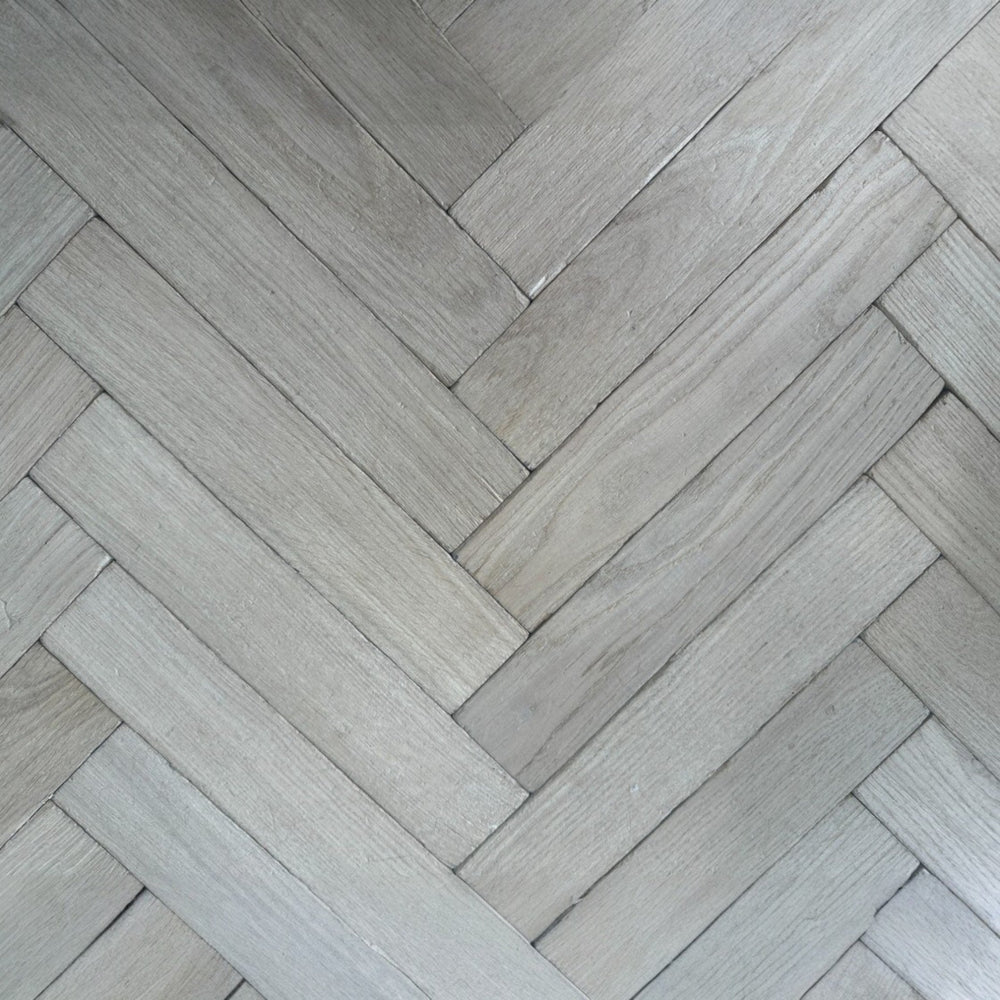
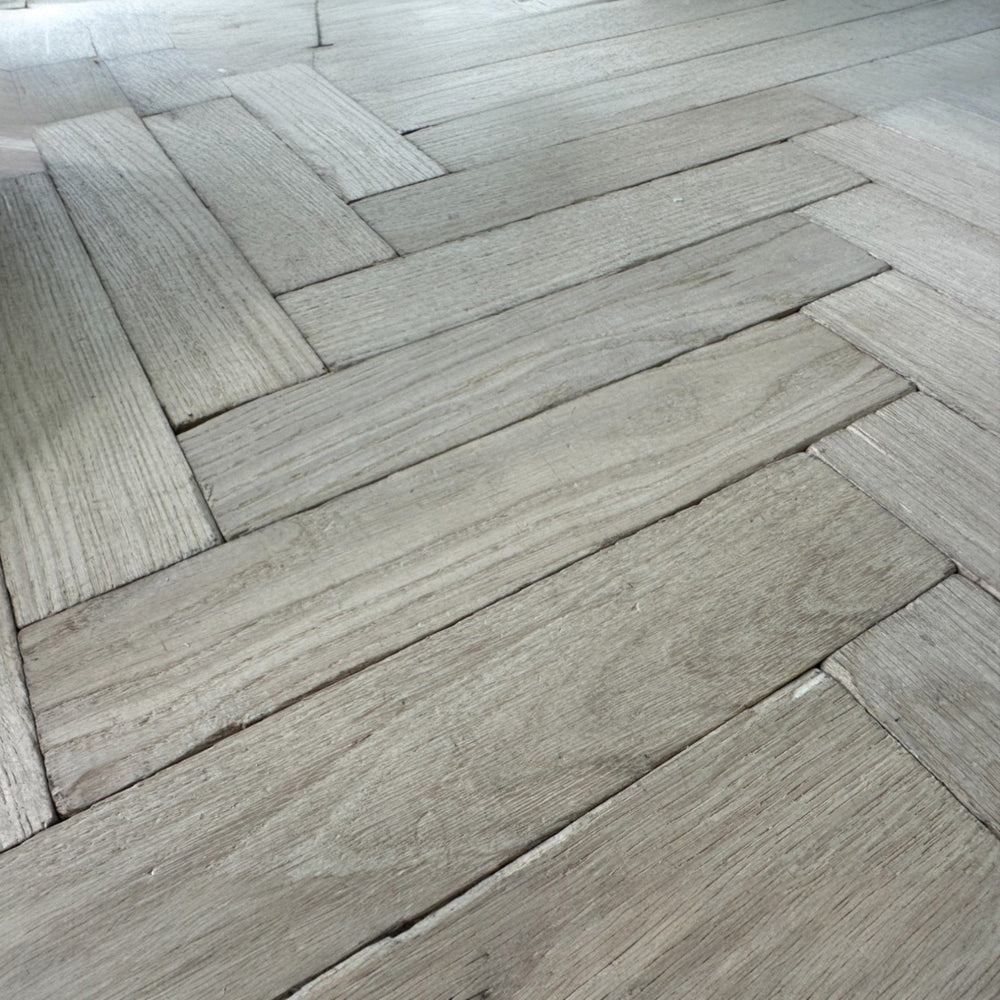
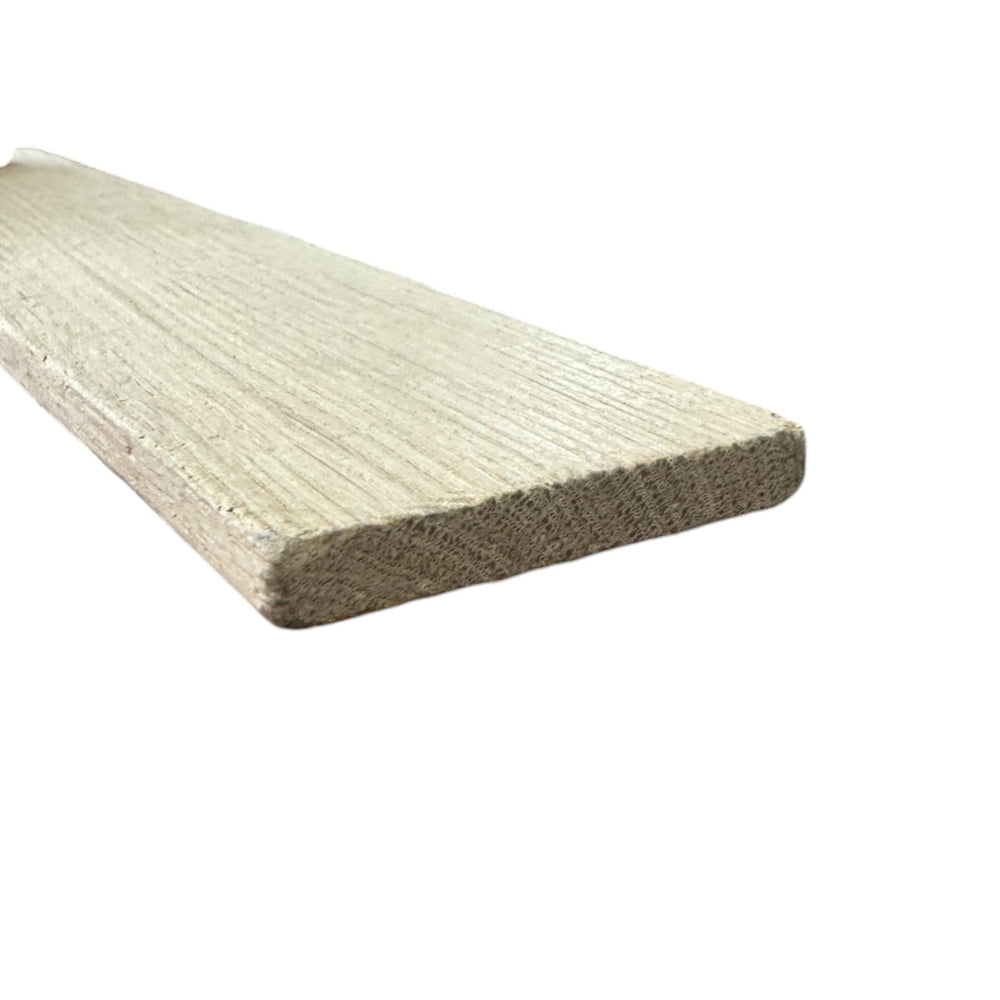
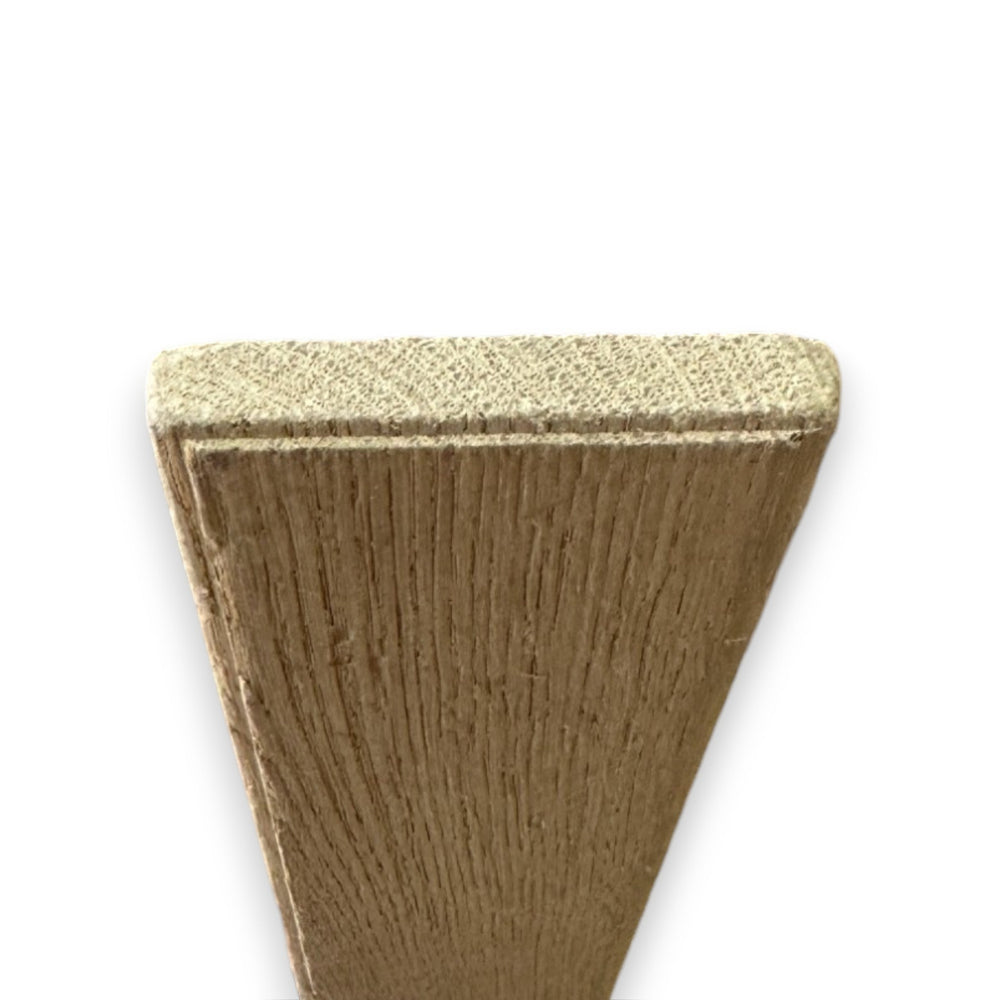
Prime Grade Solid Oak Overlay Blocks – Unfinished, Tumbled/Distressed 10x60x300mm (2.16m2 pack)
Prime Grade Solid Oak Overlay Blocks – Unfinished, Tumbled/Distressed 10x60x300mm (2.16m2 pack) is backordered and will ship as soon as it is back in stock.
Click & Collect Only
Click & Collect Only
- Place your order online.
- Select the click & collect option at the checkout.
- You will receive email confirmation that your order is ready to collect (generally within 5 minutes)
Opening hours: 7am - 4pm Mon-Fri
Collection address:
Wiltshire Wood Flooring Supplies
Unit 1
Penton Business Park
Stephenson Road
Churchfields Industrial Estate
Salisbury
SP2 7NP
Flooring Pack Calculator
Bring timeless character and elegance to your interiors with our Prime Grade Solid Oak Overlay Blocks. Measuring 10mm thick, 60mm wide, and 300mm long, these precision-machined blocks feature a tumbled and distressed finish for a soft, worn-in appearance full of rustic charm. Crafted from high-quality prime grade European oak, they offer a cleaner grain with minimal knots, making them ideal for both traditional and contemporary spaces.
Key Features:
-
Prime grade oak European 100% FSC with imperfections for a refined look
-
Tumbled/distressed finish for a naturally aged, heritage-style aesthetic
-
Supplied unfinished for full control over your choice of stain, oil or lacquer
-
10mm overlay thickness suitable for use over stable subfloors, including plywood or concrete
-
Perfect for herringbone, brick bond or basket weave patterns
Recommended Uses: Ideal for residential and light commercial settings, these overlay blocks are perfect for living rooms, hallways, bedrooms, boutique shops, and heritage renovations. Their shallow profile makes them a great choice for projects where floor height build-up needs to be kept to a minimum.
Installation Guidance:
-
Overlay blocks must be fitted over a dry, level and stable subfloor
-
We recommend full surface bonding using a high-quality wood flooring adhesive such as Bona Quantum
-
Allow blocks to acclimatise for at least 7 days on-site prior to installation
-
These blocks are unfinished, so sanding and finishing on-site is required after installation
-
Compatible with most underfloor heating systems when correctly installed over suitable substrates
recommend consulting a professional fitter if unsure. For best results, consider a light brushing or buffing before applying your chosen finish to enhance the grain and character of the oak.
🔧 Site Conditions
- fully enclosed, with doors and windows installed and all wet trades (e.g. plastering, screeding, painting) fully complete and dry.
- Room temperature should be maintained between 16–24 °C, with relative humidity between 45–65% before, during, and after installation.
Subfloor moisture content must not exceed:
- Concrete or screed: 2%
- Anhydrite screed: 0.5% (or 0.3% with underfloor heating)
- Timber subfloors: 12%, and no more than a 2% difference from the flooring itself
- Subfloor flatness tolerance: The surface must be flat within 3mm over a 2-metre span. High spots should be ground down and low spots filled using a suitable levelling compound.
📦 Acclimatisation
- All flooring must be acclimatised in the room of installation for a minimum of 48 hours before fitting.
- Keep packs sealed and stacked flat, away from direct heat or moisture sources.
- For underfloor heating installations, extend the acclimatisation period and ensure the heating is running at ambient levels during this time.
🟢 Floated Installation - Underlay - T&G Adhesive
- Suitable for engineered plank floors (not herringbone) that have a click or tongue-and-groove profile
Can be floated over:
- Concrete or screed
- Chipboard or plywood
- Flat, sound floorboards — provided they are secure, dry, and meet the flatness tolerance (3mm over 2m)
Maximum size without expansion breaks:
- 6 metres wide x 10 metres long
- Beyond this, use T-sections or expansion joints
- Do not install floating floors under fixed items like kitchens or heavy fitted furniture — in these areas, use a fully bonded installation.
- Use a high-quality underlay, ideally with an integrated moisture barrier, or a low-tog underlay when installing over underfloor heating (We always advise fully bonding installation over underfloor heating).
- Leave a 15mm expansion gap around the full perimeter and all fixed objects.
Products: Underlays
🟠 Fully-Bonded Installation - Bona R848
- Recommended for all Wood floors, and mandatory for all herringbone installations.
Can be bonded directly to:
- Concrete or screed
- Plywood or chipboard
- If installing over existing floorboards, they must first be overlaid with a minimum 6mm plywood to create a flat, stable base.
- Use a flexible wood flooring adhesive, applied using the correct notched trowel, ensuring full coverage — spot bonding is not permitted.
- Maintain 10–15mm expansion gaps at all walls, door frames, and fixed structures.
🔵 Nailed & Screw- Down Installation - Screws - Nails
- Only suitable for 18mm or 20mm thick plank flooring — not suitable for herringbone.
Can be installed directly onto:
- Timber joists
- Structural-grade plywood
- Boards should be secret nailed/screwed through the tongue, with appropriate spacing between fixings to ensure tight, secure installation.
- Always install a suitable vapour control layer over joists or between flooring and any crawl space below.
FLOOR PROTECTION AND COVERING
- If further works are required after the flooring has been installed, we recommend covering the entire floor area, not just isolated patches.
- For areas with underfloor heating, use a breathable floor protection such as Prep-Board or a similar product to prevent heat build-up and condensation.
- For areas without underfloor heating, most general-purpose floor coverings are suitable — always confirm with your builder or site manager before use.
- The surface temperature of the wood flooring must never exceed 27 °C. This includes areas beneath rugs and furniture.
- Use a floor sensor thermostat (not just room temperature control) to monitor and maintain the correct temperature.
- After installation, wait at least 48 hours before switching on underfloor heating. Begin with a low temperature and increase gradually.
- Maintain a stable environment during and after installation — ideally 18–21 °C room temperature and 40–60% relative humidity.
- Engineered wood flooring is the most suitable choice for underfloor heating. Fully bond boards to the subfloor using a compatible adhesive.
- Ensure good insulation beneath the heating system and use layers that distribute heat evenly to avoid hot spots.
- Avoid thick rugs or heavy furniture that can trap heat and cause the floor temperature to exceed 27 °C.
- Underfloor heating must be installed and commissioned by qualified professionals. Always follow local regulations and ensure proper documentation.
- Failure to follow these guidelines or exceeding the maximum surface temperature may or cause damage to the flooring.
Payment & Security
Payment methods
Your payment information is processed securely. We do not store credit card details nor have access to your credit card information.